
During the month, inflation in vegetables shot up to 35.99 per cent, as against 26.10 per cent in October. Likewise, the prices of cereals and eggs grew at a faster pace of 3.71 per cent.
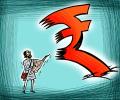
Barry Eichengreen, professor of economics and political science, University of California, Berkeley, analyzes the transparency of the Reserve Bank of India, the growth rate of the Indian economy and why he feels globalisation can never be rolled back.

In twin blows to Indian economic revival, higher food prices drove retail inflation to a five-month high of 7.4 per cent while factory output fell for the first time in 18 months. The second consecutive month of rise in consumer price index (CPI)-based inflation will add to the pressure on the Reserve Bank of India (RBI) to again raise interest rates to tame high prices. Inflation has been above the targeted zone for the ninth month in a row and as per statute, the RBI will now have to explain to the government in writing why it failed to keep prices below 6 per cent.
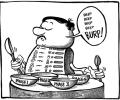
The headline seasonally adjusted Nikkei India Composite PMI Output Index, that maps both the manufacturing and services sectors, rose from 53.3 in June to 54.1 in July.
Some say the MPC will raise the rate, while others are of the view that there is already de facto interest rate tightening through rising bond yields, which might prompt the central bank to go for a pause.

Reserve Bank of India Governor Shaktikanta Das tells Anup Roy, Raghu Mohan and Niraj Bhatt that it is time for banks to lower interest rates and start lending to cash-starved finance companies after due credit appraisal and proper risk assessment.

Costlier vegetables and eggs pushed up retail inflation to a nearly six-and-a-half year high of 7.61 per cent in October, keeping it significantly above the comfort zone of the Reserve Bank.

Instead of only focusing on the tenure for which the best interest rate is available, investors should also focus on their own investment horizon.

The Reserve Bank of India is expected to announce a slew of measures to bring vibrancy into the debt market as part of its mid-term review of the annual monetary policy.

Currency scarcity weighed on manufacturing performance where growth of new work flows slowed

The government has no plan to print currency notes to tide over the current economic crisis triggered by the outbreak of COVID-19 pandemic, Finance Minister Nirmala Sitharaman informed Parliament on Monday. To a question on whether there is any plan to print currency to tide over the crisis, the finance minister said, "No Sir". Many economists and experts have suggested to the government to print more currency notes to tide over the difficult economic situation with a view to support the economy ravaged by the spread of COVID-19, and protect jobs.

RBI could opt for a 'deep cut' after winning inflation war, say experts.

The size of the hole in today's banking crisis appears to be roughly 10 per cent of GDP.

'There are deeper, underlying, forces at work and we need institutional arrangements to guard against them.'

Rajan said the process of dialogue with the government did not reach a stage where he could have agreed to stay on

Rising crude oil prices, traction in China equities and inflation concerns back home are casting a shadow on the Indian equity markets in the short term, believe analysts at Jefferies. They said this could see the markets remaining range-bound in the near term before the next leg up.

The wider Nifty hit a low of 10,033.35 before finishing at 10,044.10, down 74.15 points or 0.73 per cent.

Says impact of crisis in China won't be as big here as in some other countries
he reason behind the cut in policy rate seems to be a slowing economy
The Reserve Bank of India has set up an experts committee to implement Basel II accord by 2006 to strengthen the financial health of banks by adopting globally accepted norms for capital adequacy.

India's services sector activity moderated further in January as new business rose at a noticeably slower rate amid the escalation of the pandemic, reintroduction of restrictions and inflationary pressures, a monthly survey said on Thursday. The seasonally adjusted India Services Business Activity Index fell to 51.5 in January, down from 55.5 in December, pointing to the slowest rate of expansion in the current six-month sequence of growth. For the sixth straight month, the services sector witnessed an expansion in output.

Delivering the key mote address at the Citi's Investor Summit, Jaitley hoped that as a professional organisation the Reserve Bank will take 'the best decision'.

The Financial Stability and Development Council meeting on Tuesday started with an air of tension in the room. An official present described the participants' body language as "tetchy". However, once presentations and discussions begun, the mood considerably eased.

'If Urjit Patel had resigned after the five-state elections results people would have taken a different view. So this was the right time for him to resign.' 'He rightly resigned as he felt the differences with the government were not getting settled.'

The Indian equity market is likely to remain under pressure and rangebound over the next few months. This comes as global central banks, led by the US Federal Reserve look at a possibility of hiking rates aggressively to tame inflation. Back home, the Reserve Bank of India, too, remains data dependent in its endeavour to keep inflation in check and pursue an aggressive monetary policy stance.

RBI Governor Raghuram Rajan is regarded as credible by global financiers.
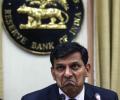
Arun Jaitley had proposed to set up a Public Debt and Management Agency.
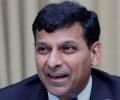
There is also a lobby within the bureaucracy that wants to see Rajan's influence curtailed

He has had a productive first year at the RBI -- one which saw, also, India's economic imbalances improve and the unexpectedly strong general election outcome.

Finance Minister Arun Jaitley said RBI and the government are in continuous dialogue and that relationship will continue.
Rajan drew attention towards the Nachiket Mor committee on PSL and said that the RBI is trying to make the entire process more effective.

A host of factors including the reform measures taken by the government and decline in global oil and commodity prices have led to lower inflation, the Finance Ministry said on Wednesday.

The year 2014-15 could well go as one of long-pending financial sector reforms, expected to have a lasting impact.

Infrastructure and inflation targeting are expected to be top priorities for the new Reserve Bank of India governor, says A V Rajwade.

'The rising cost of construction, the cost of doing business, high compliance, and inflation/interest rates going up have already reduced returns to single digits.'

'The Reserve Bank's independence has remained a work in progress, an enduring challenge that the nation has been grappling with on an ongoing basis,' says RBI Deputy Governor Dr Viral Acharya.

What stood out in his 15-year journey as a member of the political executive at the Centre was his glowing record as India's most successful and effective finance minister. Both as prime minister and finance minister, he understood the importance of gradualism, except when the economy or the polity was in a crisis.

Bajaj Finance was the biggest loser in the Sensex pack, tanking up to 8 per cent, followed by Hero MotoCorp, IndusInd Bank, Maruti and HCL Tech. Axis Bank, ITC, NTPC and M&M were among the top gainers.
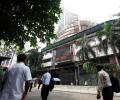
The 50-stock NSE barometer Nifty finished 14.75 points, or 0.14 per cent, down at 10,382.70 after shuttling between 10,340.65 and 10,393.15.

For protein rich items such as meat and fish, eggs as well as milk and products, the inflation in May slowed compared to last month
